A Practical Guide to UK Payroll for Small Businesses (2026/27)
Admin
July 9, 2026
0 Comments
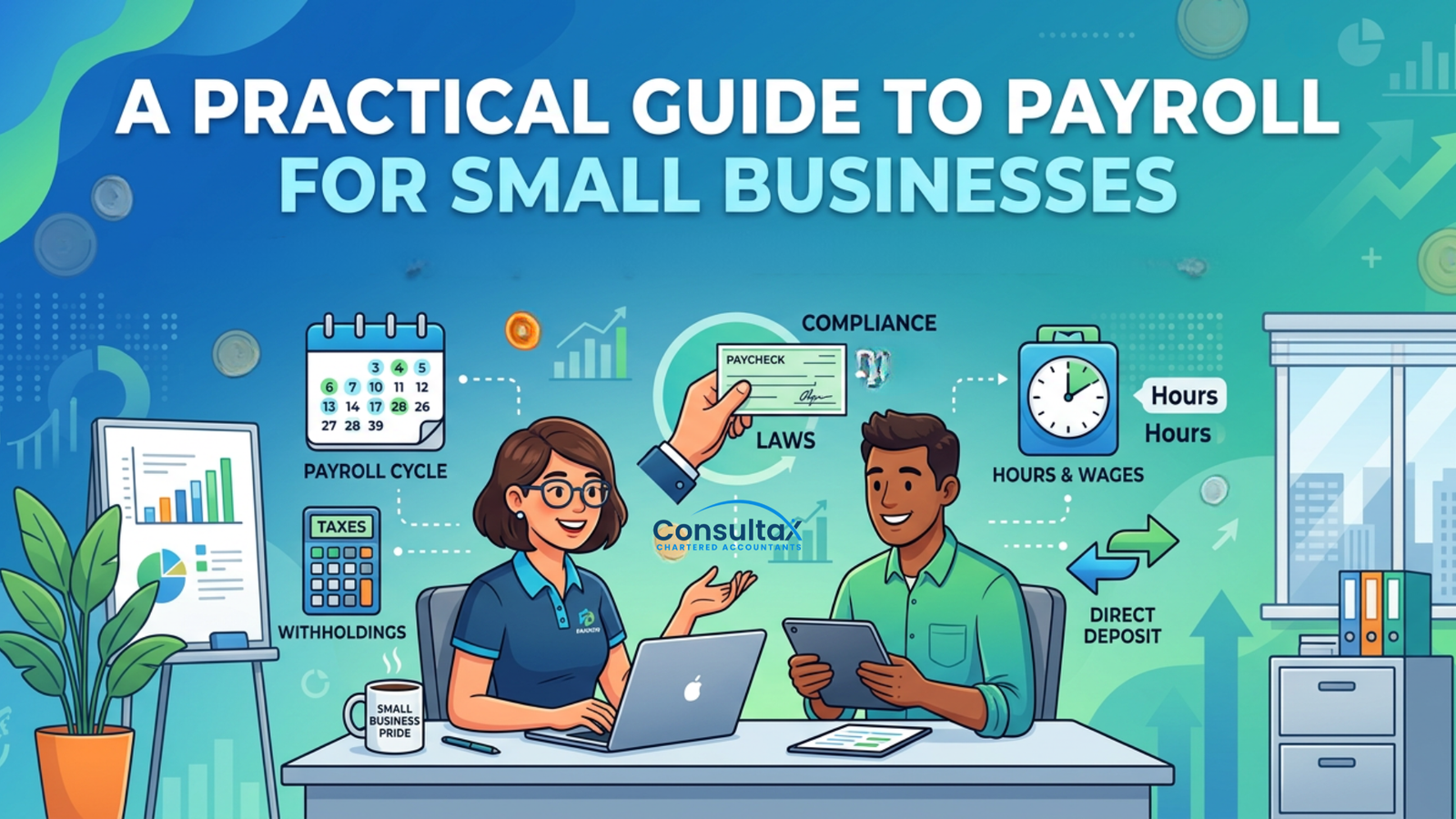
Payroll is one of the few business functions where a small mistake can have an outsized impact. Get it wrong and you risk unhappy employees, HMRC penalties and hours of unpicking errors after the event. Get it right, and payroll quietly becomes one of the most dependable processes in your business, paying people accurately and on time, every time.
For small business owners in the UK, understanding payroll is no longer optional. Payroll comes with a range of complex responsibilities. From PAYE and National Insurance to auto-enrolment pensions and Real Time Information (RTI) reporting to HMRC, there’s a lot to manage, and the rules evolve with every tax year.
At Consultax Chartered Accountants, we believe payroll is more than just a process. It is the foundation of trust between your business and your team. When payroll runs smoothly, employees feel valued, and your business stays financially strong and well-positioned for growth.
This guide walks through everything you need to know about running payroll for a small business in 2026/27, from registering as an employer to staying compliant month after month.
What Is Payroll and Why Does It Matter?
Payroll is the process of paying your employees correctly and on time while deducting and reporting the right amounts of tax, National Insurance and other statutory contributions to HMRC. It covers everything from calculating gross pay and applying tax codes to producing payslips, submitting Full Payment Submissions (FPS) and managing workplace pensions.
Beyond the legal requirement, payroll matters because it directly affects staff morale and trust. Employees notice when pay is late, incorrect or inconsistent, and persistent errors can damage retention. On the compliance side, HMRC can issue penalties of up to 100% of any underpaid tax, so treating payroll as a strategic priority, rather than an afterthought, protects both your reputation and your bottom line.
Setting Up Payroll for the First Time
1. Register as an Employer with HMRC
Before you can pay your first member of staff, you must register as an employer with HMRC. This should be done before your first payday, and it can take up to two weeks for your employer PAYE reference to arrive, so it is worth doing this in good time. You will need this reference to run payroll and to submit RTI reports.
2. Choose HMRC-Recognised Payroll Software
All employers must use payroll software that is recognised by HMRC to report PAYE information in real time. Whether you choose HMRC's free Basic PAYE Tools (suitable for businesses with fewer than ten employees) or a commercial package such as Xero, QuickBooks or Sage, the software should calculate Income Tax, National Insurance and student loan deductions automatically and submit reports directly to HMRC.
3. Collect the Right Employee Information
Before running your first payroll, gather each employee's full name, address, date of birth, National Insurance number, tax code (from their P45 or a completed starter checklist) and bank details. Accurate starter information avoids emergency tax codes and reduces the risk of costly corrections later on.
The Core Elements of Small Business Payroll
Every pay run, whether weekly, fortnightly or monthly, follows broadly the same steps.
• Calculate gross pay: hours worked, overtime, commission and any bonuses.
• Apply deductions: Income Tax through PAYE, employee National Insurance, pension contributions, student loan repayments and any court-ordered deductions.
• Add employer costs: employer National Insurance contributions and employer pension contributions, which sit on top of gross pay rather than being deducted from it.
• Generate payslips: itemising gross pay, each deduction and net pay for every employee.
• Submit an FPS to HMRC: on or before each payday, reporting pay and deductions in real time.
• Pay HMRC: transfer the tax and National Insurance collected, either monthly or quarterly depending on the size of your payroll.
Getting comfortable with this cycle is the foundation of confident payroll management, and most HMRC-recognised software will automate the bulk of these calculations for you.
Workplace Pensions and Auto-Enrolment
Under auto-enrolment rules, employers must automatically enrol eligible staff into a workplace pension scheme and contribute towards it. For 2026/27, the qualifying earnings band remains £6,240 to £50,270 a year, with a total minimum contribution of 8%, made up of at least 3% from the employer and the remainder from the employee. Even if you only employ one or two members of staff, auto-enrolment duties still apply from the day your first employee starts, so this needs to be built into your payroll process from the outset rather than treated as an afterthought.
Key Payroll Rates and Thresholds for 2026/27
HMRC updates its rates and thresholds every April, and 2026/27 brings several changes that small business owners should build into their budgeting. The table below summarises the headline figures.
|
Item |
2026/27 rate or threshold |
|
Employee Personal Allowance |
£12,570 (frozen) |
|
Employer NI Secondary Threshold |
£5,000 a year |
|
Employer NI rate (Class 1 secondary) |
15% |
|
Employee NI rate (above the Primary Threshold) |
8%, then 2% above £50,270 |
|
Employment Allowance |
Up to £10,500 a year |
|
National Living Wage (age 21+) |
£12.71 an hour |
|
National Minimum Wage (18–20) |
£10.85 an hour |
|
National Minimum Wage (16–17 and apprentices) |
£8.00 an hour |
|
Statutory Sick Pay |
£123.25 a week, payable from day one |
|
Statutory Maternity/Paternity/Adoption Pay |
£194.32 a week or 90% of average weekly earnings, whichever is lower |
|
Auto-enrolment qualifying earnings band |
£6,240 to £50,270 a year |
Source: HMRC, Rates and thresholds for employers 2026 to 2027.
A significant change for 2026/27 is the reform of Statutory Sick Pay. Previously, SSP was only payable from the fourth qualifying day of sickness, and lower earners fell below the qualifying threshold entirely. From 6 April 2026, the waiting period has been removed, meaning SSP is now payable from day one of absence, and the earnings threshold has also been scrapped, extending SSP eligibility to considerably more employees. Employers should update their absence policies and payroll settings to reflect this change.
The Employment Allowance also remains a valuable relief for smaller employers, allowing eligible businesses to reduce their employer Class 1 National Insurance liability by up to £10,500 a year. Most small businesses qualify, although companies where the director is the sole employee are generally excluded, so it is worth checking your eligibility each tax year rather than assuming it carries over automatically.
Common Payroll Mistakes Small Businesses Make
• Using an out-of-date tax code or failing to act on HMRC tax code notices promptly.
• Missing the FPS deadline, which must be submitted on or before payday, not after it.
• Overlooking the National Minimum Wage and National Living Wage increases that take effect each April, particularly for younger workers or apprentices.
• Failing to keep adequate records; HMRC requires payroll records to be retained for at least three years, and can investigate further back if inaccuracies come to light.
• Misclassifying workers as self-employed when, in practice, they meet the criteria for employment status, creating unexpected PAYE and National Insurance liabilities.
Most of these errors are avoidable with the right systems and a clear monthly checklist, but they remain some of the most frequent triggers for HMRC compliance checks among small businesses.
Should You Run Payroll In-House or Outsource It?
For a very small team, running payroll in-house using free or low-cost software can work well, provided you have the time and confidence to stay on top of changing legislation. As your headcount grows, or your pay structure becomes more complex, with shift patterns, commission or benefits in kind, outsourcing to a qualified accountant or payroll bureau often becomes more cost-effective than the time it takes to manage in-house, and it significantly reduces the risk of a compliance misstep.
A professional payroll service also brings an extra layer of scrutiny that software alone cannot provide, catching the edge cases, such as a director's National Insurance calculation, a mid-year tax code change or the correct tax treatment of a termination payment, before they become a problem.
How Consultax Helps Manage Your Small Business Payroll
At Consultax Chartered Accountants, we support small business owners across the UK with accurate, fully compliant payroll services, from initial PAYE registration through to monthly RTI submissions and year-end reporting. Whether you need us to manage payroll from start to finish, advise on auto-enrolment duties, or simply act as a second pair of eyes before submissions go to HMRC, our team of payroll experts are here to take the administrative burden off your hands so you can focus on running your business.
Conclusion
Payroll for a small business does not need to be overwhelming. With the right registration in place, HMRC-recognised software, a clear understanding of the 2026/27 rates and thresholds, and a consistent monthly process, most small business owners can manage payroll confidently. Where the administrative load becomes too much, professional support is available and often pays for itself many times over in the penalties and stress it helps you avoid.
Trusted Payroll Services for Small Businesses
Stop worrying about compliance and deadlines. Let our experts handle your payroll so you can focus on growing your business.
Book a MeetingCategory:
Taxation
Tags:
Tax Filing, Taxation
Related Articles


Comments (0)
No comments yet. Be the first to comment!
Leave Comment