Tax Planning for High Earners: Strategies to Keep More Cash
Admin
October 13, 2026
0 Comments
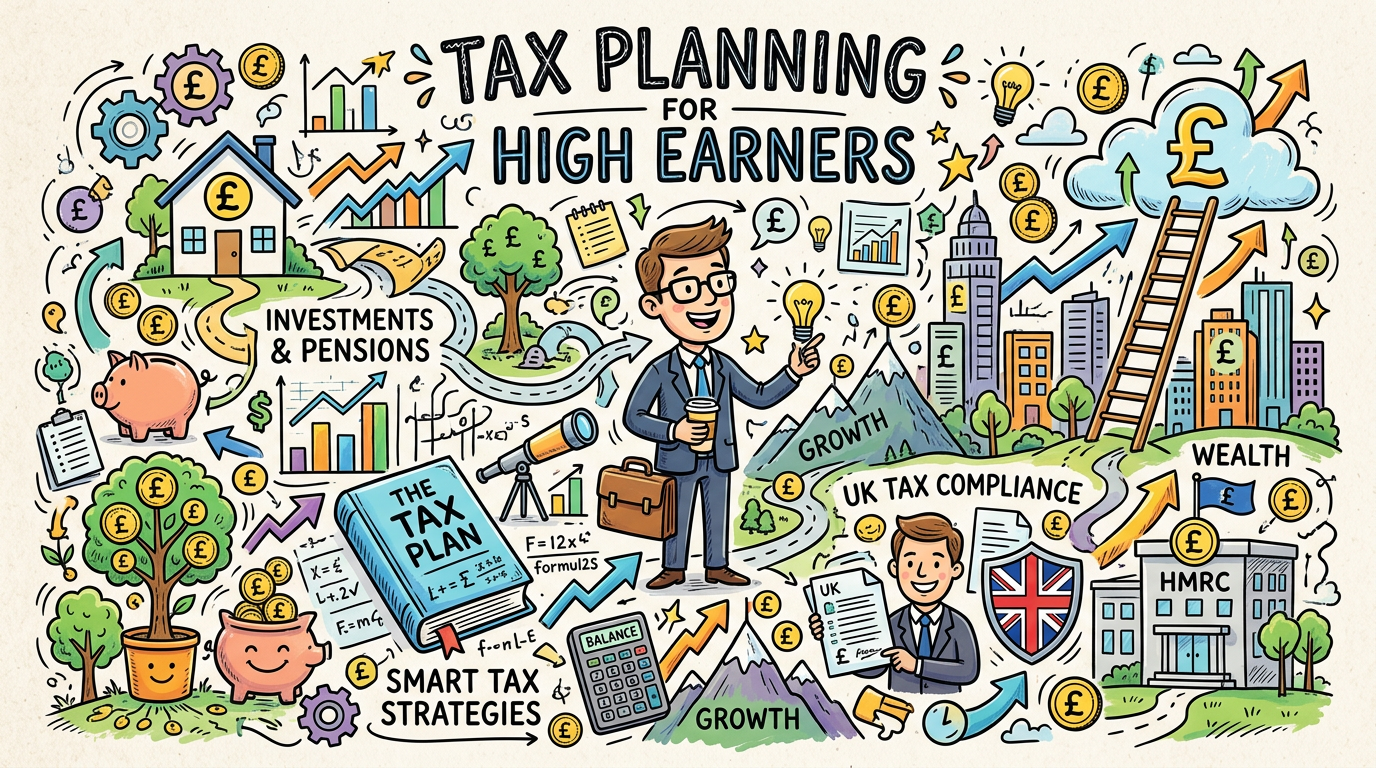
Quick answer: Tax planning for high earners means using the allowances, reliefs and exemptions the law already provides and doing so before the tax year ends on 5 April. The most effective tax planning strategies in 2026/27 are pension contributions, managing income around the £100,000 and £125,140 thresholds, using ISAs, planning disposals for Capital Gains Tax, and structuring family and business income carefully.
Earning more should feel rewarding. Yet for many professionals, directors and business owners, each extra pound is taxed more heavily than the last. Between £100,000 and £125,140, the effective marginal rate reaches 60%. The good news is that paying more tax as you earn more does not mean paying more than the rules require.
We work with high earners across the UK, and the pattern is consistent. Those who plan early keep considerably more of what they earn. Those who wait until January often find the best options have already closed.
This guide explains where the pressure points are, what you can do about them, and how to improve tax efficiency without crossing any lines.
What Is Tax Planning For High Earners?
- Definition of Tax Planning: Tax planning for high earners involves legally organising income, savings, investments and expenditure to ensure they pay no more tax than legally required.
- Tax Planning vs Tax Avoidance: Tax planning uses legitimate tax reliefs and allowances as intended by law. Tax avoidance often involves artificial or contrived arrangements designed to obtain tax advantages that Parliament did not intend. HMRC may challenge such arrangements.
- Use Available Tax Reliefs: High earners can consider legitimate tax-saving opportunities, including pension contributions, Individual Savings Accounts (ISAs) and Gift Aid donations, subject to the relevant eligibility rules and limits.
- Plan Throughout the Tax Year: Tax planning should be an ongoing process rather than a last-minute exercise. Regular reviews can help identify opportunities and avoid unexpected tax liabilities.
- Review Income and Bonuses: The timing and structure of bonuses, salary and other taxable income can affect an individual's overall tax position. Any planning must comply with applicable tax and employment rules.
- Consider Dividends and Investments: Company directors and investors should review dividend payments, investment income and potential asset disposals to understand their tax implications before making decisions.
- Review Pension Contributions: Pension contributions may reduce taxable income or provide tax relief, depending on the arrangement and the individual's circumstances. Annual allowance limits and restrictions for high earners must be considered.
- Take a Joined-Up Approach: Salary, bonuses, dividends, pension contributions, charitable donations and asset sales can interact. Reviewing these together can help individuals make informed decisions and manage their overall tax position effectively.
Who Counts As A High Earner For Tax Purposes?
There is no single legal definition, but several thresholds change your tax position sharply:
|
Threshold (2026/27) |
What happens |
|
£50,270 |
Income above this is taxed at 40% |
|
£60,000 |
High Income Child Benefit Charge begins, with the benefit fully withdrawn by £80,000 |
|
£100,000 |
Personal Allowance starts to reduce by £1 for every £2 of adjusted net income |
|
£125,140 |
Personal Allowance is lost entirely and the 45% additional rate begins |
|
£200,000 to £260,000 |
Pension Annual Allowance may start to taper |
These bands are frozen, so pay rises and inflation pull more people into higher rates each year. That makes tax planning strategies more valuable than they were even a few years ago.
How Do Pension Contributions Reduce Your Tax Bill?
Pension contributions are usually the most powerful tool for high earners. Personal contributions receive tax relief at your marginal rate, which can be 40% or 45%. They also reduce your adjusted net income, which can restore some or all of a Personal Allowance you would otherwise lose.
The standard Annual Allowance for 2026/27 is £60,000, covering both your own and your employer’s contributions. Three points deserve attention:
- Tapering: If your threshold income exceeds £200,000 and your adjusted income exceeds £260,000, the allowance reduces by £1 for every £2 above £260,000, down to a minimum of £10,000.
- Carry forward: You may be able to use unused allowance from the previous three tax years, provided you were a member of a pension scheme in those years.
- Flexible access: Once you draw pension benefits flexibly, the Money Purchase Annual Allowance of £10,000 applies instead.
Company directors can also have their company make employer contributions. These are generally deductible for Corporation Tax if they meet the “wholly and exclusively” test, and they do not attract Income Tax or National Insurance in your hands.
Two changes are worth noting. From April 2029, National Insurance relief on salary sacrificed pension contributions will be capped at £2,000 a year. From April 2027, unused pension funds are also due to fall within the scope of Inheritance Tax, which changes how pensions should feature in estate planning.
How Can You Avoid The 60% Tax Trap?
If your adjusted net income sits between £100,000 and £125,140, every extra £1 of income removes 50p of your Personal Allowance. Combined with the 40% tax charge, that produces an effective 60% rate on that slice of income.
Reducing your adjusted net income below £100,000 is one of the clearest ways to improve tax efficiency. You can do this through:
• Personal pension contributions
• Gift Aid donations, which reduce adjusted net income by the gross amount given
• Timing bonuses or other discretionary income where you have control over it
Take an example. Someone earning £110,000 who pays a £10,000 gross pension contribution brings their adjusted net income down to £100,000. They regain the full £12,570 Personal Allowance, receive pension tax relief, and may also reduce or remove a Child Benefit charge. The real cost of that £10,000 contribution is far lower than it appears.
Which Tax Allowance And Relief Claims Do High Earners Often Miss?
Claiming every tax allowance and relief available to you is the foundation of sound planning. Common ones include:
• Gift Aid: Higher and additional rate taxpayers can claim back the difference between the basic rate and their own rate on the gross donation, through self-assessment.
• Professional subscriptions and fees: Where approved by HMRC and required for your job.
• Marriage and household planning: If you are married or in a civil partnership, the Marriage Allowance is not available once either partner is a higher rate taxpayer. But holding income producing assets in the name of the partner with a lower tax rate can still reduce your joint bill.
• Dividend Allowance: Only £500 in 2026/27, so it offers limited shelter, but it is worth using for both spouses.
• Capital losses: Allowable losses must be reported to HMRC to be carried forward, even if you have no gains to offset today.
Eligibility rules are precise. An expense is not deductible simply because it feels work related, so accurate records matter.
What Are The Best Tax Planning Strategies For Capital Gains Tax?
Capital Gains Tax is charged at 18% for basic rate and 24% for higher and additional rate taxpayers on most assets, after the £3,000 annual exempt amount. Because that exemption is small, planning ahead matters:
• Time your disposals: Spreading sales across tax years uses more than one annual exempt amount.
• Use spouse transfers: Transfers between spouses or civil partners living together are generally made at no gain and no loss, which allows gains to be realised by the partner with the lower rate.
• Report and use losses: Realising losses can offset gains in the same year or later years.
• Use your wrappers: Holding investments in ISAs and pensions keeps future growth outside the CGT net.
Once a sale completes, most of these options disappear. The planning must come first.
How Can Company Directors And Business Owners Improve Tax Efficiency?
Directors have more levers than employees, but also more rules. The balance between salary, dividends and employer pension contributions affects your Income Tax, National Insurance and Corporation Tax together. With dividend rates now higher, the optimum mix has shifted for many owner managers.
Property investors should also prepare for the new property income rates of 22%, 42% and 47% from April 2027. Reviewing ownership structures and mortgage arrangements now gives more room to respond.
When Should You Start Tax Planning?
Start well before 5 April, and ideally at the start of the tax year in April. Pension funding, ISA subscriptions, Gift Aid donations and many asset disposals all need to be completed within the tax year. A mid-year review also gives you time to correct course if your income changes unexpectedly.
Why Do Clients Choose Consultax Chartered Accountants?
At Consultax Chartered Accountants, we believe tax advice should be clear, proactive and personal. Our principal, Varun Gupta ACA, is ICAEW qualified and trained at PwC, with a background that includes UBS and BNP Paribas, so our clients benefit from experience gained at the highest level of finance. As an ICAEW regulated firm with a presence in both the UK and UAE, we are well placed to support high earners, directors and investors whose affairs cross borders. We plan with you throughout the year rather than just at deadline time, and we make sure every allowance and relief you are entitled to is claimed correctly. If you would like to improve your tax efficiency before the year end, we would be glad to help.
Conclusion
Tax planning for high earners comes down to timing, awareness and acting before deadlines pass. By using pension relief, managing income around the £100,000 threshold, claiming every tax allowance and relief available, and applying sound tax planning strategies across investments and family finances, you can improve tax efficiency and keep more of what you earn.
The rules change often, and your circumstances are unique. A short review with a qualified accountant before 5 April can make a meaningful difference.
Frequently Asked Questions
What Is The Best Way To Reduce Tax As A High Earner?
For most people, personal and employer pension contributions deliver the largest saving, followed by ISAs, Gift Aid and careful timing of income and gains.
How Much Can I Pay Into My Pension In 2026/27?
The standard Annual Allowance is £60,000, or 100% of your relevant UK earnings if lower. It may be tapered to as little as £10,000 for very high earners, and you may be able to carry forward unused allowance from the previous three years.
Why Is My Effective Tax Rate 60% Between £100,000 And £125,140?
Your Personal Allowance reduces by £1 for every £2 above £100,000, which adds an effective 20% on top of the 40% rate.
Is Tax Planning Legal?
Yes. Using allowances, reliefs and exemptions as Parliament intended is lawful. Artificial avoidance schemes are different and carry real risk.
When Should I Speak To An Accountant?
Ideally before the tax year ends on 5 April, and whenever your income, business or investments change significantly.
Looking to Maximise your Wealth and Reduce your Tax Liabilities?
Partner with Consultax Chartered Accountants for expert tax planning and investment guidance tailored to your financial goals.
Book a MeetingCategory:
Taxation
Tags:
Business, Expert Accountant, Taxation
Related Articles
Comments (0)
No comments yet. Be the first to comment!
Leave Comment